

Process as Purpose
a conversation with production designer and architect Emily Greco

Hello!
Today I’m back with an amazing conversation with an artist I’ve looked up to for quite awhile, but only now connected with to chat about artmaking. Emily Greco!
Emily is a designer, architect, and construction manager, among many things. I don’t recall when I first came to learn about their work, but their work immediately caught my eye when I did. I immediately needed to keep in the loop about what they were up to.
Fast-forward many years later and a particular post of theirs instigated me reaching out for this conversation (which you’ll hear about below).
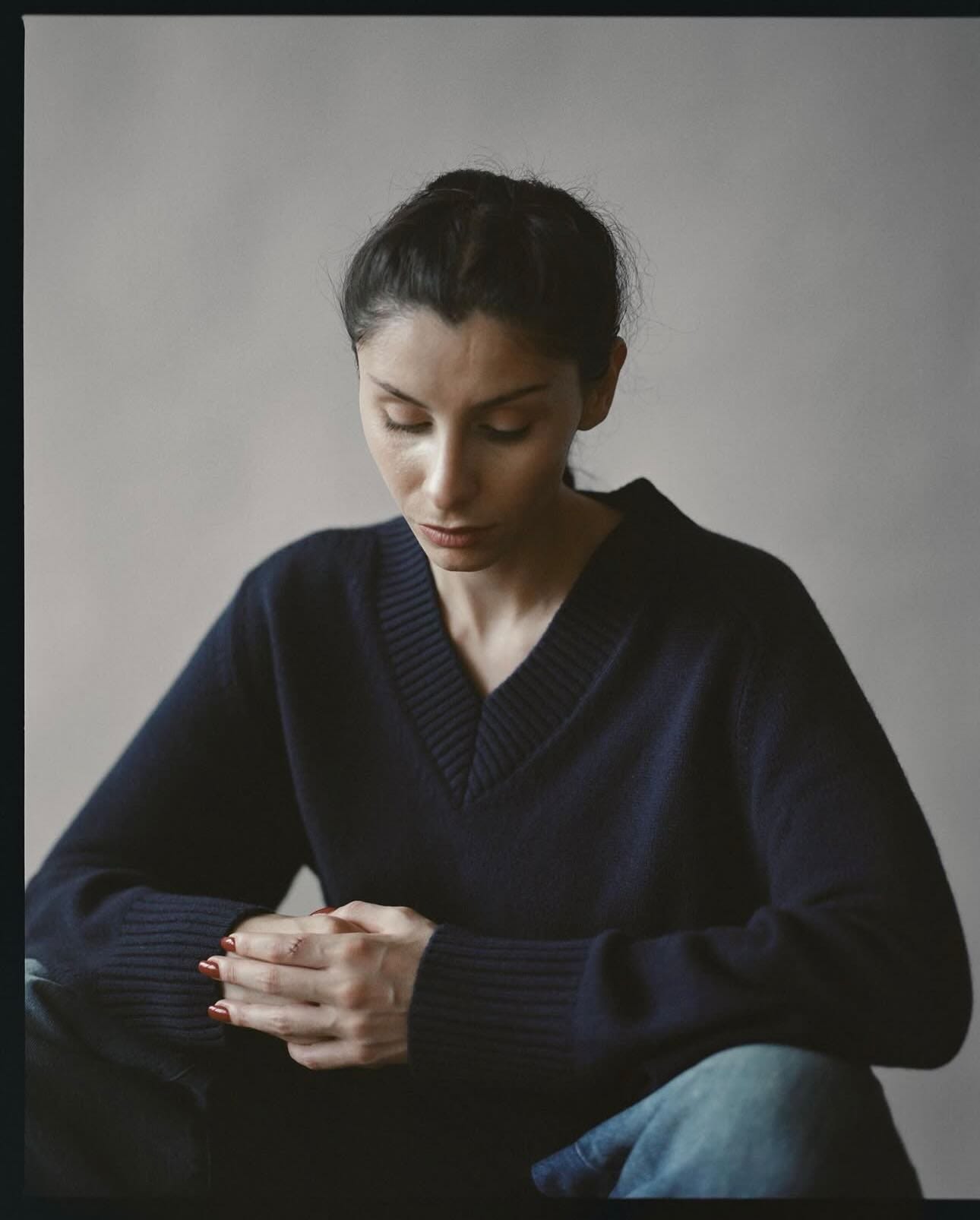
Emily’s work has been seen in music videos, theatre sets, restaurants, and many other places. She has an MFA in Interior Design, a BFA in Sculpture, and a BA in Art History. A true wealth of knowledge and it was a joy to speak with her.
Topics discussed:
how AI can take away the joy of craft
how idea generation taps into the collective unconscious
the differences between art and design
a healthier frame to using social media
how we can find purpose in process
Will DiNola: I feel like I saw one of your early design posts a long time ago, probably five or six years ago, and I was really struck by it.
I think it was either something you had made with little figurines or it was you were mixing media. I think it was photography, but taking rocks and wood and little bits of stuff and putting it into a white physical space that I really was drawn to.
Emily Greco: It's crazy that that's five or six years ago. That feels like ages... Rather... I don't know how it feels. Time doesn’t feel real.
WD: Covid and all this stuff in between feels like not that long ago. But then the before Covid time feels like so long ago.
EG: That’s true. That’s another life. But yeah, that work that you're referring to, some exercises that I started when I was studying for my MFA in interior design. And I remember you reaching out and saying something about wanting to collaborate in an animation capacity. I don't have really the hard skills for animation, though. Maybe with all the AI tools that we have now, I could probably do something.
WD: Yeah, some of that [AI} stuff is overwhelming to me, but I’m sure it’s all inevitable, so we kind of have to get a grasp of some of it.
EG: I know what you mean. I'm in a space personally where I feel very morally neutral about AI and especially the creative tools that are popping up constantly, new tools all the time. I don't use any AI tools, tech, or software in my own processes. I haven't found a use for them. At least, to me, it just shortcuts the enjoyable aspect of it, which is the creative aspect. That's really not the thing I want to outsource at all.
WD: No, it's true. It's funny. I don't know if you saw this video that was going around, I think he's the CEO of a music AI thing, I think it's called “Suno” or some gibberish word, but the clip that was going around was him talking about his software and saying that no one enjoys making music. Everyone is bogged down by all of the technicalities. And I think everyone thought, who genuinely does [making art], enjoys the craft of it, you're taking away the craft of it. So maybe for people that aren't interested in [craft], then it seems like a burden to do it, but for most artists: that's what it's all about.
EG: I think that's what separates— let me try not to present this in a dichotomous way— but that kind of mindset is very outcome oriented and wanting, to your point, to short circuit the creative process to produce more generative outcomes, more iterations with ease.
And there's that level of instant gratification of seeing that reminds me that's very “client side” type thinking, where it's just: outcome, product, iteration, options.
That type of generative way of creation eliminates process. To me, it just defeats the purpose of music at all. Because the purpose of music is not just to listen to it, it's also to create it.
WD: A process rather than a product.
I think you had a post recently that I really liked about stained glass, that you were getting really inspired by this company that’s still continuing stained glass production and trying to keep the craft, and that skillset, alive.
Big shout out to my friends at Rohlf Studio, a stained glass workshop preserved between 4 (!) generations of the Rohlf family in New York (est 1920) 🤯
These artists are responsible for the ethereal stained glass you’ve seen adding so much character to the historic cathedrals and civic buildings of our city🗽🏛️🍎
to learn a craft is to allow your authorship to dissolve into an object of beauty, embracing a sense of duty in carrying a legacy forward ✨
This is knowledge that has to be actively preserved! only by doing the thing with your own body 🤲🏼
for me committing to a craft adds a richness and satisfaction to living that just can’t be replicated ❤️
Something that I’ve been feeling is a lot of the way I make music on the computer, and I’ve been feeling with all of the AI stuff, it’s really important for me to learn the physicality of the crafts, like not only learn an instrument, but designing the instrument. I know you work in millwork, so just understanding those kinds of things. The hands-on crafts I feel are becoming more important than they ever have been.
EG: Totally agree. It's the flip side of the rise of AI and taking de-centering skill and handcraft in our society broadly. I think a lot of people, like you're saying, are feeling that urge and that need to preserve. There's a level of urgency to preserve human knowledge, our bodies aren't just for consuming. I think that when we live lives that are consumer focused, there's a level of instant gratification. To kind of park back upon the note about the AI music. It's like dopamine, like sugar, but it's not nourishing substantially. You know, it's not a macronutrient.
I think that our bodies are naturally made to explore rhythms, as you're describing, to take elements from our environment and hone them and come to understand them and create with them.
I'm not somebody who ever has worked in code. I wonder what's the perspective of somebody who's designing these AI programs. They have that kind of complicated creative relationship to these tools.
WD: That's an interesting thing to think about too. I'm not familiar enough with coding. You're kind of inspiring me now to maybe talk to people that are in it, because I have a lot of friends that work in it. From the outside, it seems like they still appreciate art and appreciate these things. But I wonder if maybe some of the way that you think when you're approaching coding is kind of generative, you're problem solving, but maybe when you're designing websites and things, you are creating options for yourself…
The thing is that you kind of are always doing that in some senses [in art], even with the process aspect of it.
EG: Just as you're describing coding there, as designing optionality, reminds me of how one might describe architecture and what I do, because the architecture itself isn't the end product of that process. It is really the beginning of the next phase of the life of the process, which is the lived environment. You're designing a set of parameters within which a series of, or a range of events can unfold. That range might be unlimited, but it's certainly shaped by the positive forms that you construct or erect.
So similarly, I can think of somebody designing software as creating a range of possibilities. I think that's what's unique about design, if I had to like compare artmaking with designing. I've done both. And I do both.
For a long time, I would resist comparing the two because it's the classic— I'm trying to get away from dichotomous thinking that might be— it's already come up a few times.
But in undergrad, I studied sculpture and art history. And in graduate school, I went to school for interior architecture. And the way I would describe them differently is that a designer works with an end user in mind. You anticipate somebody connecting the dots of that process compared with art making, you do in a sense design. As an art maker or as an artist, you do imagine an experience on the other end, but I think that it's less about other people and more about the maker.
I don't know if I believe it a hundred percent what I just said, but I'm exploring it…
WD: I think that there's probably times where you're oscillating between the two. Thinking about a filmmaker, they have to have some sense of the audience, but at the same time, you want to stay true to yourself. There ends up being overlap because I think if design was only about trying to appease the client or trying to please the prospective user and only that, it might be harder to get as much fulfillment from it. Not that you can't get fulfillment in that way, but I feel like having the merging of the two things would make it more purposeful.
You said your MFA was in interior architecture?
EG: Right.
WD: What’s your role now in a lot of the work you’re doing?
EG: My professional role is project manager. I'm a construction manager, construction project manager. Our company is really small. We're a small studio and we facilitate all architectural woodworking, effectively. That's a simple way of describing what we do. But we also work with other materials and elements as well, like metal and glass and fabric.
There's like a sequence of who hires who. You have usually a client, somebody who hopefully has or usually has a lot of resources and money. They're gonna hire a general contractor and an architect, or maybe a general contractor, an architect, and an interior designer. Then that general contractor needs to subcontract folks who specialize in different areas of construction, such as plumbing, electric, metal fabrication, millwork (that's us).
And to me, millwork and woodworking, it's the most tactile and detailed element of what a person experiences in the interior of a space. To me, it's a person's way into space. It's kind of like absorbing atmosphere through the details. I'm always saying details produce atmosphere, because it is the most minutia, the most detailed, precise specificity of integration of many, many elements that a person is going to experience in space. It's the finest strokes.
So in short, I'm a project manager. And basically, I work with the GCs, the architects, the clients, but mostly the former. And I liaise between them and our shop, our carpenters, who are super talented.
And my other key colleague is, his name is Yuichi, he’s a brilliant cabinet maker, has been a cabinet maker for decades, and he's our fabrication coordinator. So he's the person who we're reviewing details and engineering strategies together, along with my boss.
So it's like all day back and forth between many different entities communicating information that I basically get from meetings, bringing that back to my team. How are we fabricating this? What's our installation schedule? But it gets really granular.
WD: What did you say your undergrad work was in?
EG: Sculpture and Art History.
WD: So you were kind of separating the design and the art. Do you feel like you're able to merge them in the work that you're doing, or do you kind of have sidequests. You've also done set design / production design for theater?
EG: Theater, dance, music videos. I love set design.
I’m having so many thoughts at once… I think that studying architecture was a direct response to studying sculpture in some ways. When I was studying fine arts in school, my education was super conceptual, experimental. I had the opportunity to make it really whatever I wanted it to be. I did learn a lot of craft in school, but I was really a conceptual artist. I think I am a conceptual artist still.
I found that my work was getting more and more environmental. It was rarely object-based. Or if it was object-based, it would be existing in a world that was also simultaneously developing.
And [when it was] time to go to graduate school, I really wanted to learn some seriously hard skills, so that I could confront what I saw at the time as my shortcomings. Making things real. Simply making things real. And feeling like I had no limitations as to what I could potentially realize in the world if I could understand how things are made.
I think what’s cool about designing sets. It’s taking that skillset of first envisioning, putting pen to paper, whether through writing or drawing, through various imagery, and then not quite grafting that idea in your environment. For film is interesting and video is cool because it's like, it's image-based, which allows for certain freedoms of expression than when you make something in the physical world that needs to represent itself wholly from every angle and be experienced and lived in. It brings in a different level of different range of parameters. Physics, obviously function, things in the world. But making design for film and video can be super expressive and just free in a way that excites me. It's like the counterpart to the work that I do on a daily basis, which is very, very, very tied to the real.
WD: Building in general, this is like manifesting or visualization. People say, when they want to manifest something, they visualize it first. I mean, this has to happen in terms of doing blueprints, or making any of this type of work.
EG: It’s true. It becomes a skill unto itself. It is a skill unto itself to look at something on paper, to create something on paper and have a bridge in your mind between what that will be in space. It’s very freaky in architecture to spend a lot of time looking at drawings and then all of a sudden, one day you’re in that space and you see the way a line correlates with a wall.
You realize how important every single moment of that production process is. From emails to, you know, there’s nothing mundane, every single aspect of what you do in pre-production ultimately matters— literally matters. Materializes.
WD: I really like thinking about that that way, because I think, especially in creative work. There’s having a job that’s supporting your creative work, but then there’s trying to make a living off of your craft. I think that’s a great thing for anyone who’s reading this to take away. Thinking about all of the mundane things, or the things you might be frustrated by, [they] are still going into the materializing of that end result. So I do think that’s a really great, very optimistic view.
EG: Thank you. I think I am optimistic by nature. I think that that perspective, that what you do matters, is like the sauce to living. It is what makes living rich. What you do matters for you and for others.
Obviously, we have to work, so it's something that we have to contend with spiritually, the non-optional nature of work. That's difficult. We all have to come to terms with it.
I'll get into some Marxist thought. I am kind of Marxist in the sense that I feel, not in many senses, but in the sense that I feel like work is something that's natural, a certain type of work. It's what comes from us organically that drives us and inspires us ultimately, because what we do matters.
It's a part of what sustains the architecture of the whole, talking about the self and others, the individual and the collective. It's not just me. Nothing I'm doing is just for me. It's just more than that. And what's my evidence? A feeling… (laughs)
WD: I always find it interesting, all of this scientific evidence that’s literally talking about, you have all these health markers of things you’re trying to do to live a healthier life, but if you don’t have purpose in your life— and that idea of your purpose as connected to your work— than it’s going to be very difficult to have a healthy life. You could be eating all of the right things, you could be exercising, but if you don’t have that aspect, that could be like the biggest biomarker or whatever you want to call it.
EG: It's crazy. It takes us all the way back full circle to your original thoughts about AI music and it helps me to understand why that process contributes to the deterioration of the spirit. Living is not just about outcomes. It's not about result. No. It's about the living, the purpose, and the meat and substances in doing the thing.
That's why I found Rolf's stained glass studio so potent. The space, when you walk in there, the air is just like thick with history. It actually smells like a cathedral because many of the same architectural components of a cathedral are in that space. But what they’re doing is [using the] body to carry knowledge through this lifetime. To carry it forward as an individual, carrying this collective knowledge into the next generation.
It’s hard to describe the kind of literal high. There’s like a highness that comes from that experience. Even for me, just to be present to it. I was feeling like I was high on drugs. I was like, what is this? I think this is just meaningfulness. This is meaningful.
I’ll spin off. And I know I’m going in a million directions, but I think part of the reason why our society is so embedded in self-destructive behaviors, abuse of drugs for instance, is because we’ve been so fractured and separated from that process of meaning.
I’m not against drugs or anything like that. I just need to say that I feel like our bodies are receptors toward experience, for experiences. We’ve been deprived of our natural rights to live and experience many aspects of life.
I don’t have to go down that rabbit hole, because it’s a really long one, but I think that in craft, in making things, we experience something close to purpose.
WD: People describe channeling. You could say when you’re art-making, you’re channelingl, whether that’s God-given, or whatever you want to call it. There’s like an inherent connection to others just by the nature of receiving it. Just by the nature of being a human, being yourself, you’re going to have a similar perspective, I would think, to many other people.
EG: Yes. It’s freaking crazy. What a trip to exist. I feel like creating anything is like a natural coexisting expression. It's like a necessary expression for existence in the fact that we exist, we have all this energy, we're processing and experiencing so much and it's like, it needs to go somewhere. It has to move. And there’s an opportunity to hone that movement like a dancer would dance and control the movement of the body.
It is like we are like Avatar: The Last Airbender. We are honing, channeling elements. It’s that serious. And I use the word God too, because, to me, it’s God, godliness, and God-ness, whats beyond the limits of our understanding.
I'm sure you felt like this, like ideas are just not your own. Certain things just drop into you and you're like, where did that come from? But certain things can only come through you maybe. But at the same time, I also think that ideas are in the zeitgeist, like precipitation. And if you don't express it in the moment, somebody else is gonna download it.
It's like that thought experiment before about separating the art and design, it’s so funny because it's like an endless question. I totally agree with everything you were saying about how design would be effectively meaningless without a subjective perspective. That is what of course brings satisfaction to the process. And I think that it kind of reflects the idea of this back and forth. A tension or relationship between anticipating a client or a user and creating from the self and creating as an expression of the self those two things. I think you probably couldn't boil it down more fundamentally than those two things being slightly in contradiction or coexisting at the same time, because what you were describing reminds me of how I would imagine the nature of consciousness in general, which is that we feel individual and we also are connected with everyone and it's just both at the same time.
WD: I always liked David Lynch, Rest in Peace—
EG: Catching the big fish.
WD: Yeah, his whole illustration or metaphor of catching the fish. I always liked that as a way of thinking about it, because I do feel like that is pretty accurate to my experience and I think to a lot of other people’s experience. You do always hear people say, if you don’t act on the idea that you’ve received, someone else is going to act on it in a different way and beat you to it. And I think that makes it all the more urgent.
EG: I love the urgency. I think the urgency is heightened by social media, where we have the opportunity to share. I used to struggle with social media. I didn't have one for a really long time. I was like fuck social media. I don't want to perform. I don't want to be seen. I just want to exist. My experience with this nature that we're describing is something sacred.
But I've come to appreciate the instantaneous nature of just dropping an idea. And I feel there is a sense of satisfaction in just putting it out there and de-centering the self a little bit in that process. The lighter and less attached I feel to just letting something go, whatever type of a post it is. It could be a dumb selfie. It could be a work that I spent months on, but just letting it go and understanding that it doesn't have to be mine in a precious way. I don't have to hoard energy or ideas. Just let it flow, let it go.
WD: I like that way of thinking. I would say for me, and a lot of people, social media can feel pretty self-oriented, but I think that’s a nice frame to think about, “I’m just letting go of my idea and I’m sharing it.” I think that is a nice way to make it a little bit healthier, instead of I’m showing myself. This is me. And the pushing aspect of it. Thinking of it more of, these are creations and they’re just coming and going.
EG: Thank you. I think it would be easier for us to de-center ourselves and our ego in the process if, in [you] describing why we all struggle in the sense of social media, is because it's designed to be about expressing yourself and it's not like we just drop anonymous images off and it's a part of a common repository for images.
It is centered around crafting an identity and it feeds off of that human nature. Ultimately, I think [it] promotes consumerism, but yeah, that's my idealistic way of thinking about how can I approach it as a process.
But I don’t feel like that all the time though, not to seem like a monk. I feel self-conscious if I post a picture of myself, you know what I mean?
WD: Yeah.
EG: Every time.
Thanks for the chat Will :-)